
Buying grooming tools · Label explainer
Read a pet shampoo label before the front-of-bottle promise
Identify the exact product, intended animal and directions before comparing ingredients.
Start by pinning down the full product name, because a brand line can run several formulas that share a family name and differ in scent, additives and intended job. The example used throughout this piece is a single documented product: earthbath’s Oatmeal & Aloe Itch Relief Shampoo in Vanilla & Almond.
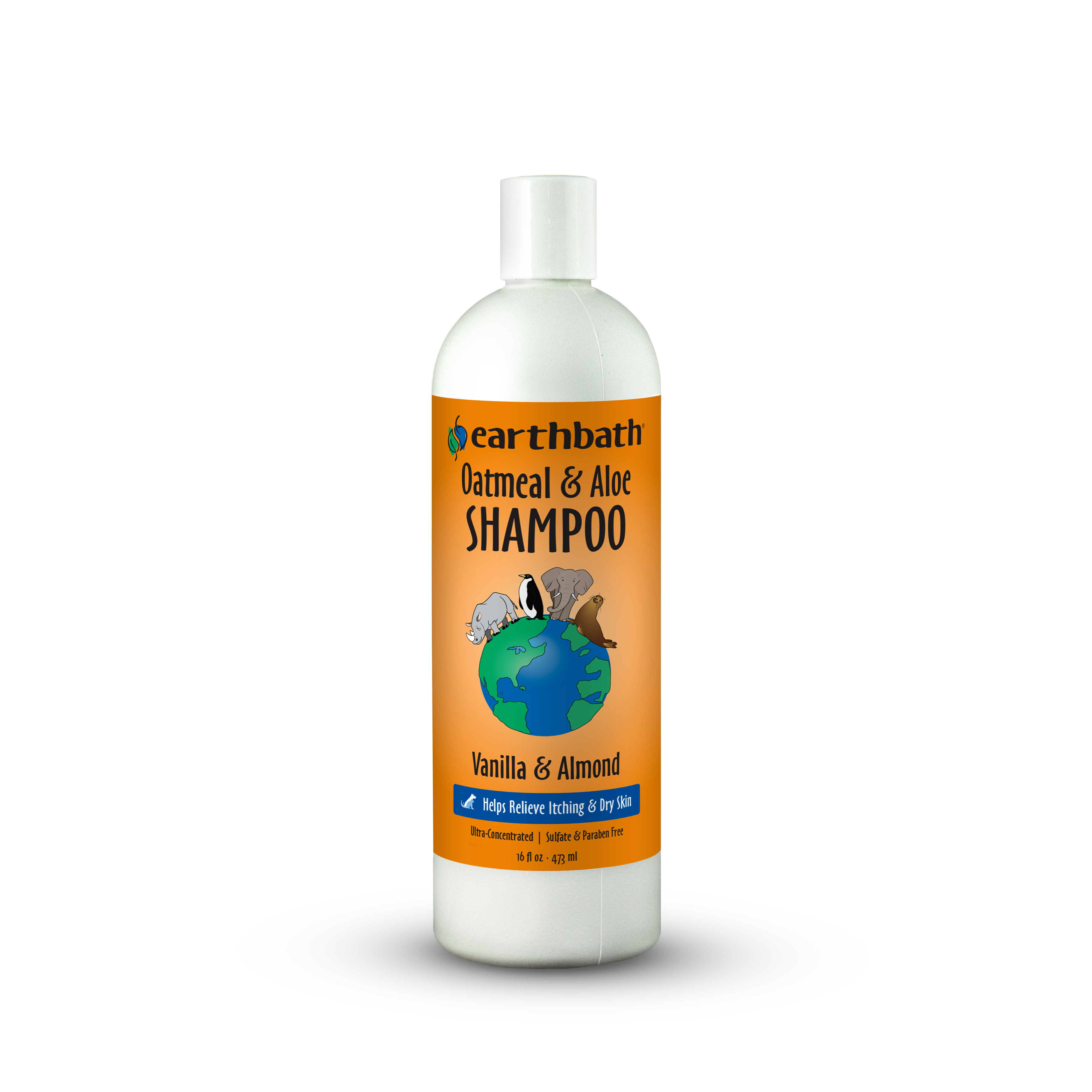
Three parts of that name carry information. “Oatmeal & Aloe” names the featured ingredients, “Itch Relief” names the intended purpose, and “Vanilla & Almond” names the scent variant.
Write down the complete product name and the size on the bottle in front of you, then compare that exact string to whatever page or panel you’re reading, so the directions you compare belong to the same named product.
The brand’s product page lists four size choices: 16 fl oz, 32 fl oz, 128 fl oz and 320 fl oz. These are listed options, not a stock check. Match the selected size and its price when you open the shopping page.
A practical way to organize this step is a short identity block you fill in before you read anything else:
| Field | What to record | Vanilla & Almond example |
|---|---|---|
| Brand | Exact spelling on the bottle | earthbath |
| Formula name | Ingredient + purpose words | Oatmeal & Aloe Itch Relief Shampoo |
| Variant | Scent or sub-version | Vanilla & Almond |
| Size | Volume printed on the label | 16 fl oz (the page also lists 32, 128 and 320 fl oz) |
| Stated age limit | Any minimum age on the panel | Safe for pets over 6 weeks, per the maker |
That last row records the brand’s own wording. Raise it with your veterinarian if your animal is very young, pregnant or medicated.
If any field on your bottle disagrees with the page you’re reading, stop and ask the manufacturer which panel applies to your lot and size before you follow a dilution or dwell-time instruction.

Read instructions before front-label promises
Read the INSTRUCTIONS panel first, because it tells you how the product is meant to be used, and the front label only tells you what it’s meant to do. On the Vanilla & Almond page, the directions are specific enough to change how you run the bath.
The sequence the maker publishes:
- Prepare the bottle: the maker tells users to shake it before use.
- Application: the directions call for a wet coat and lather across the coat, with an explicit eye-avoidance instruction.
- Leave the lather on for at least 90 seconds. The stated reason is to give the oatmeal and organic aloe vera time to work.
- Optional companion product: the page suggests an earthbath conditioner and associates it with sheen and manageability. That is the maker’s product claim.
The 90-second wording describes a minimum in the maker’s directions. Check the full directions on the bottle you have, and ask the maker about any missing or conflicting step before using it.
The panel also allows dilution: ten parts water to one part shampoo, with diluted shampoo discarded after 24 hours. If you mix a squeeze bottle for a big-dog bath, record the mixing date and time so the 24-hour limit remains clear.
The Precautions block sets the boundaries. The product is for coat and skin only. Flush with clean water if it reaches the eyes. Keep it away from children, and call a physician if a person swallows it.
The brand also says color changes may occur because of the naturally derived ingredients, and it recommends checking with your veterinarian before using a new product on a pet with sensitivities.
Follow the panel as written. If your bottle’s printed directions differ from the web copy, ask the maker which one governs your bottle.
Keep ingredient facts separate from outcomes
Sort the label into two columns in your head: what the ingredient panel states as fact, and what the description promises as a result. The panel is verifiable text. The promise is a maker claim until something else backs it up.
Here’s the published ingredient list for this formula, in order as printed:
- Purified water
- Renewable plant-derived and coconut-based cleansers
- Colloidal oatmeal
- Aloe vera (marked as a certified organic ingredient)
- Vitamins A, B, D and E
- Panthenol
- Botanical fragrances of vanilla and almond
- Citric acid
- Phenoxyethanol
Those are label facts. Compare the published list with your bottle and with anything your veterinarian has asked you to check. The fragrance name alone does not establish an allergy assessment. The brand also links its own ingredients glossary; ask the maker for clarification when the listed wording does not answer a specific ingredient question.
Now the claim column. earthbath describes the shampoo as soap free and pH-balanced, says the colloidal oatmeal and organic aloe vera help combat irritation, promote healing and re-moisturize dry skin, and states it will not wash off topical flea applications. Each of those is the manufacturer’s description of its own product.
Attribute them that way when you write them down: “earthbath states…” keeps the sentence honest, and it keeps you from treating a marketing line as a tested result for your animal’s skin.
The regulatory frame explains why that distinction carries weight. The FDA’s page on its role in protecting animal health lists grooming aids, giving unmedicated dog shampoo as its example, among miscellaneous animal products that are not typically regulated by FDA, noting they may fall under the jurisdiction of the U.S. Consumer Product Safety Commission or another agency depending on how a product is made, marketed and distributed.
That’s a general statement about a category, and the agency’s own qualifiers (“not typically,” “depending on”) are part of the meaning. It doesn’t assign a classification to any particular bottle, including this one.
What that means for your reading habit is narrow and useful. Treat the ingredient panel and the directions as the parts of the label that identify contents and intended use.
Treat descriptive language about relief, healing or deodorizing as the maker’s position, and take questions about whether a formula suits your dog’s skin condition to your veterinarian, which is what the brand itself recommends for pets with sensitivities.
One more sorting rule: retailer listings and star ratings are places to buy a bottle and check stock. Do not treat either as proof that the shampoo caused a health outcome.
If a label ever leaves you without a documented instruction, say a bottle with no legible directions or an unfamiliar dilution, contact the manufacturer and ask before improvising a method. Write the answer on a card taped inside the grooming cabinet, next to the product name, size and the 90-second dwell time you’ll otherwise guess at mid-bath.
