
Buying grooming tools · Documented product comparison
Chris Christensen Big G or Original Oval Pin Brush?
Pick the Big G for fluffing, shaping and thick undercoat on dense coats, and the Original Series Oval Pin Brush for general detangling across coat types; that is how Chris Christensen’s own pages describe them.
 By Rae Okafor, Grooming editor · 2 min read · Published · Updated
What is being compared
Pick the Big G for fluffing, shaping and thick undercoat on dense coats, and the Original Series Oval Pin Brush for general detangling across coat types; that is how Chris Christensen’s own pages describe them. This comparison lines up two brushes from the same maker: the Chris Christensen Big G Slicker Brush and the Chris Christensen Original Series Oval Pin Brush. The manufacturer builds several brush families for coat work, and these two use different tools entirely: one is a slicker, the other a pin brush.
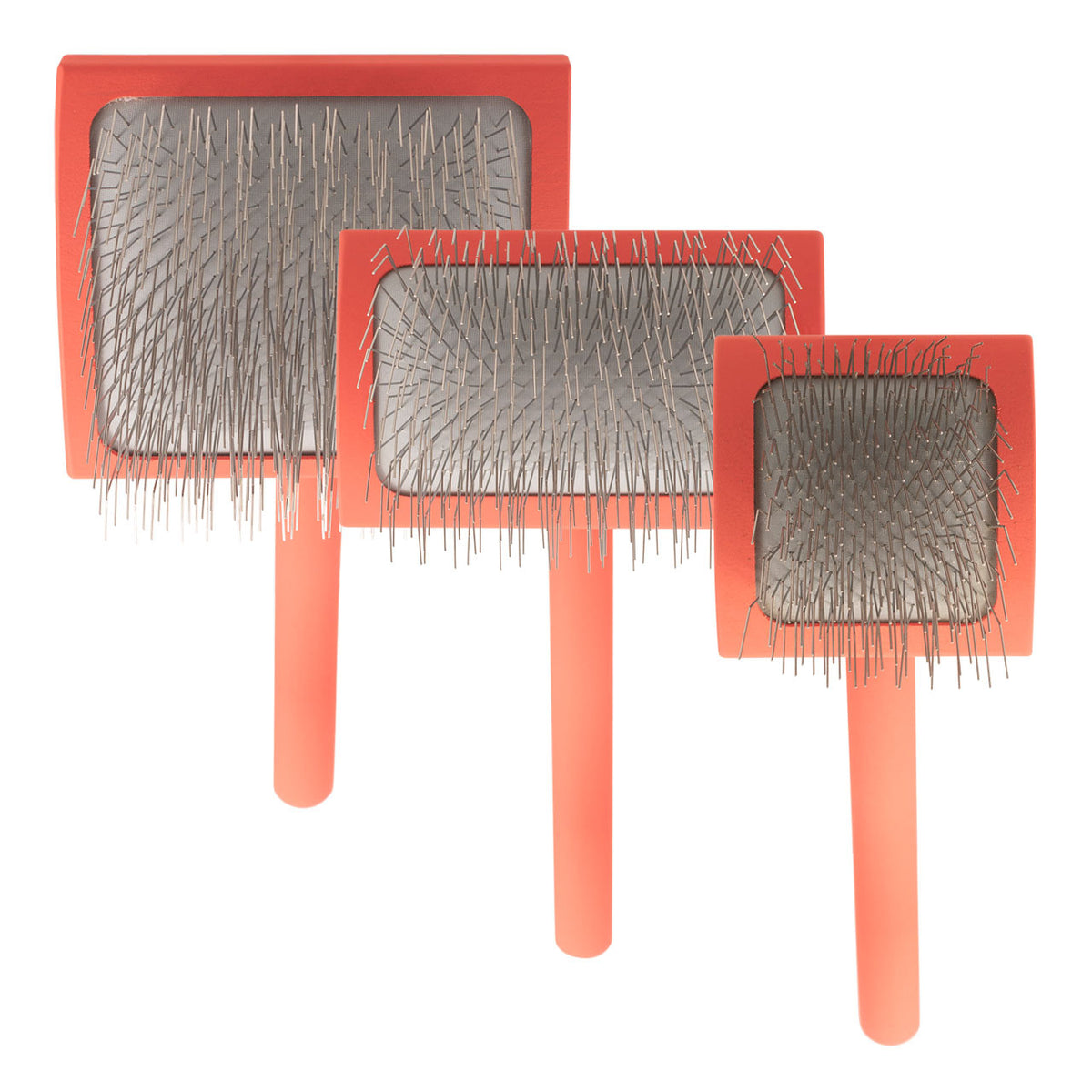
The Big G is listed as a slicker brush with stainless steel pins measured at 27mm. It comes in three sizes, Baby G, Medium Big G, and Large Big G, and each size pairs a specific head dimension with a stated use, from hard-to-reach spots to full-body work on larger dogs.
The Original Series Oval Pin Brush is a separate product line, built around a Beechwood body and an oval head shape. It comes in three pin lengths, 20mm, 27mm, and 35mm, and the product page ties each length to a different coat depth.
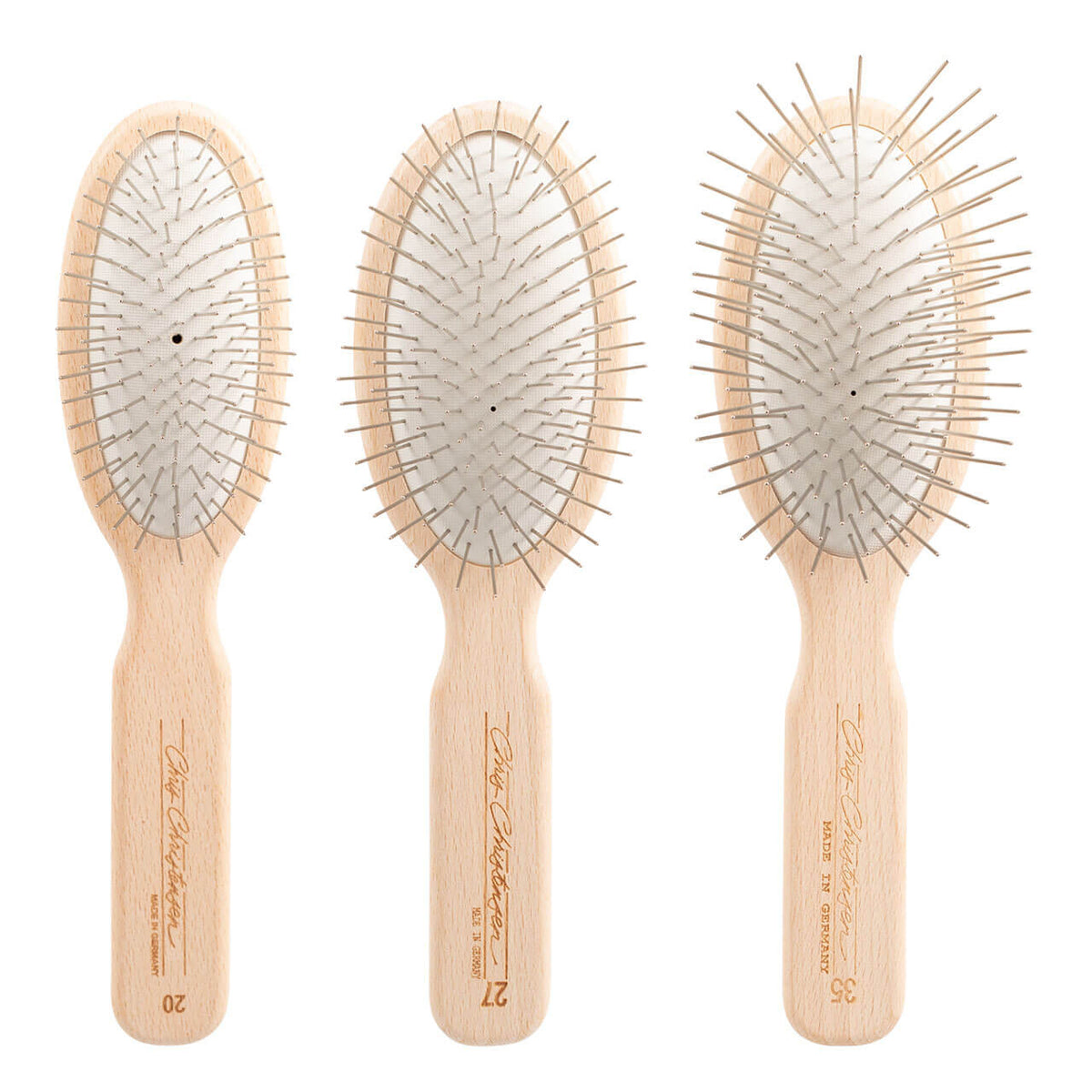
The main difference is construction: the Big G has long, bent pins in a flexible cushion, while the Original Series has polished-tip pins in a firm cushion on a Beechwood body. The Big G page describes long, bent stainless steel pins in a flexible cushion pad, an extreme curved back, and an extra long handle. The Original Series page describes stainless steel pins that are ground and polished at the tips, set in a durable, firm cushion with one air vent hole, on a Beechwood body. The Big G’s pins run 27mm, and the Original Series spans 20mm to 35mm, so the cushion, the tip finish, and the pin shape carry the real dividing line between them.
Both product pages list a 6-month manufacturer’s warranty and note Prop 65 compliance. Confirm both details directly on each listing before you buy.
Why the model details matter
Pin length and brush size work as real functional numbers on each product page, mapping a model to a job, and that makes them worth reading before the description underneath.

On the Big G page, the maker states the brush carries “30% more pins than the Big K brushes.” The same page’s slicker chart is more specific than that marketing line: both brushes carry 27mm pins, and the chart lines the Big G up against long coats and the Big K against long and dense ones. The three Big G sizes each map to a stated task. The Large Big G, at 8″ length, is listed for body work. The Medium Big G, at 7-3/8″ length with a 2-3/8″ x 3-3/4″ head, is listed for legs, columns, and poms. The Baby G shares that same 7-3/8″ length but carries a square 2-3/8″ x 2-3/8″ head, listed for hard-to-reach areas. The two shorter brushes share the same overall length and differ in head dimensions. Bring the maker’s stated tasks to the groomer who knows your dog’s coat as a starting point for questions, and let that groomer’s read on the dog in front of them settle the final call for each body area.
The Original Series pin brush follows a different logic. Its three pin lengths tie to coat depth on the product page, and the mapping is direct: 20mm for short coats, 27mm for medium to long coats, and 35mm for long, thick, full coats. That mapping is the maker’s own recommendation and the full extent of what the page offers on the question, leaving what happens with a mismatched pick as an open question.
Both charts still call for an assessment of the individual coat in front of you. The maker’s own coat-length guidance works as a starting point, and the actual fit for a dog described as “long-coated” or “short-coated” still depends on that dog. Breed, coat condition, and how matted or clean the coat is at the time of brushing all factor into whether a listed size is the right one, and that judgment belongs to the groomer or owner reading the dog, ahead of the spec sheet.

Which brush suits which coat job?
These two brushes serve different stages of coat work, and the product pages support that split directly. The Big G is described as a tool “to make grooming easier and faster when working with dense coats,” with bullets that read “Use to fluff and shape dense coats” and “Removes thick undercoat.” The Original Series pin brush is described more broadly, suited to “all coat types” and useful for “effective and efficient detangling.”

That difference points to a rough division of labor. The Big G leans toward fluffing, shaping, and undercoat removal on long or dense coats, while the Original Series pin brush leans toward general detangling and glide-through work across a wider range of coat types, and each product page stays within its own job description.
| Criteria | Big G Slicker Brush | Original Series Oval Pin Brush |
|---|---|---|
| Pin type | 27mm stainless steel, bent | Stainless steel, ground and polished tips |
| Sizes/lengths offered | Baby G, Medium, Large | 20mm, 27mm, 35mm |
| Body material | Not stated on product page | Beechwood |
| Stated best use | Dense, long coats; undercoat removal | All coat types; detangling |
| Price (as listed) | $55.50 to $62.50 | $37.00 to $45.00 |
| Warranty | 6-month manufacturer’s | 6-month manufacturer’s |
Choosing between them as a first brush or an added tool comes down to how you want to organize the routine, since the product pages leave that call to you. One workable routine uses a pin brush for general detangling and a slicker for finishing dense areas.

Treat performance language as a claim
The Big G product page frames its intended function as making grooming easier and faster. The Original Series product page frames its intended function as effective and efficient detangling.
The Big G page states the brush has “30% more pins than the Big K brushes.” That figure compares two products inside the same maker’s own lineup. How the Big G performs against pin brushes generally, against another manufacturer’s slicker, or against the Original Series pin brush on a specific coat stays outside what that figure covers.
The Original Series product page states its pins are ground and polished for comfort, and describes them as gliding through the coat easily.

Both pages come from the manufacturer’s own store, which matters for how to read them. Specifications and pricing come straight from the maker, the best available source for those numbers. The descriptive language around them comes from the same source, and it is selling. Reading either page still calls for veterinary or professional grooming judgment about what a specific dog’s coat actually needs, and neither page claims to substitute for that judgment.
When a product description uses words like “perfect for” or “great for,” treat that as the manufacturer’s positioning of the product within its own catalog. It works as a useful signal for narrowing options, and the actual outcome for an individual dog’s coat, condition, or grooming history still depends on that dog. Reading spec sheets and marketing copy as two different kinds of information, each read on its own terms, keeps the comparison grounded in what’s actually stated.
Check the purchase details
Price and stock vary by size, and both listings price each variant separately instead of charging one flat rate. The Big G is priced at $55.50 for Baby G, $59.50 for Medium, and $62.50 for Large, according to its product page. The Original Series Oval Pin Brush is priced at $37.00 for 20mm, $39.00 for 27mm, and $45.00 for 35mm.
Check the selected size on the current listing before ordering. A listed range of sizes doesn’t mean every option is currently in stock.
Each product page states a 6-month manufacturer’s warranty and Prop 65 compliance. Both pages stop at that timeframe without spelling out full coverage, so confirming the specifics directly with the manufacturer before purchase is a reasonable step if that matters to your decision.
The Original Series page also notes the brush is “crafted with quality materials in Germany,” a manufacturing detail specific to that product line. The Big G page leaves out a comparable country-of-origin statement.
Before buying either brush, check the current price and size availability directly on the product page, since both can shift. Confirm the pin length or brush size against the coat you’re working with, and treat the maker’s own coat-length guidance as a starting point you check against that specific dog.
If a specific dog’s coat presents matting, skin sensitivity, or another condition, that judgment call belongs to a groomer or veterinarian, ahead of either product listing.
