
Groomer conversations · Cost and responsibility guide
Compare a home grooming setup with a service
Start with one task, such as a bath, when comparing home grooming with a service. List the preparation, handling, drying and cleanup it would involve at home, then ask the service what its appointment actually includes.
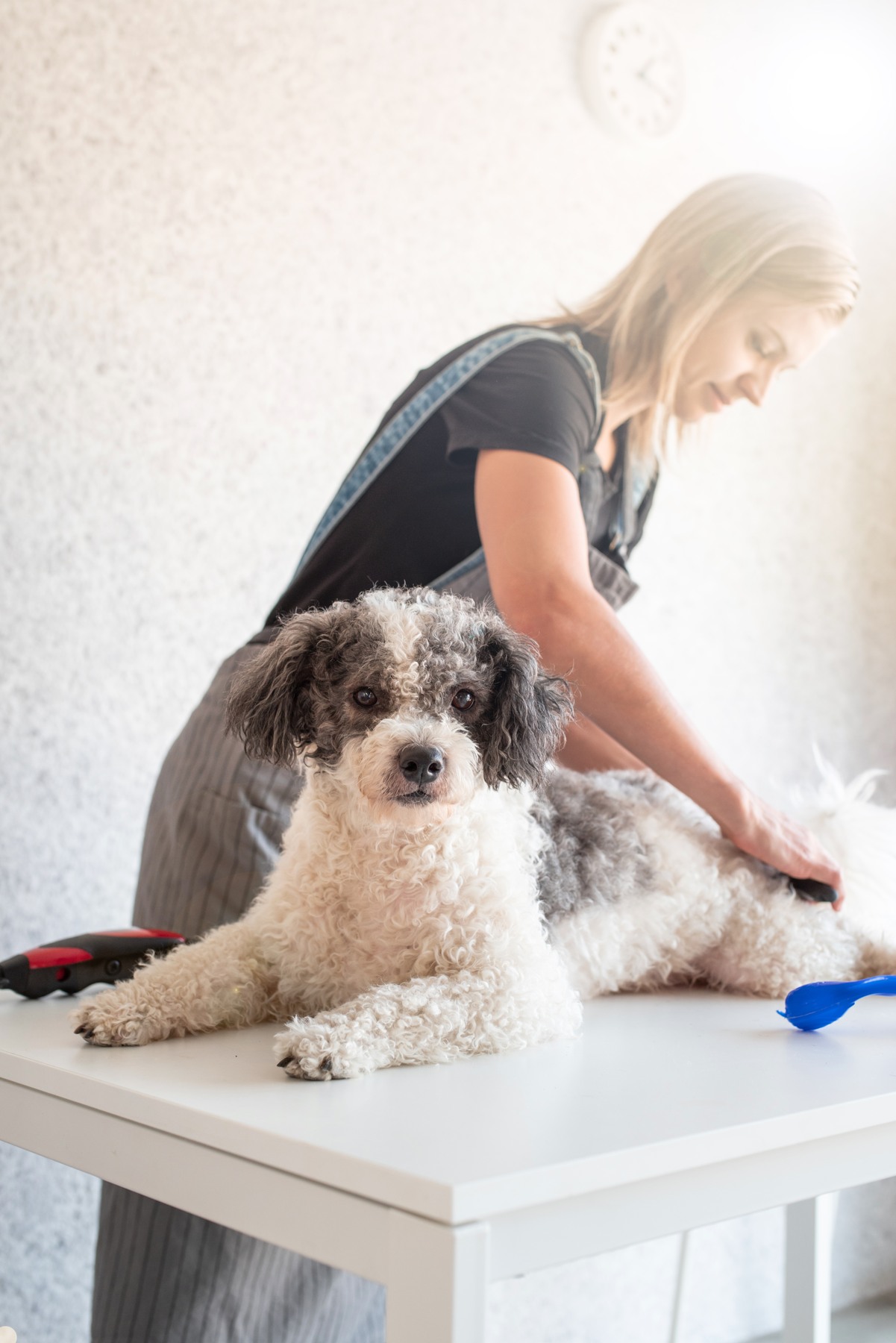
Compare the same task
For the service option, confirm who handles each step and what information they need from you. Record your own drop-off, collection and follow-up tasks alongside the quoted work.
Use the same comparison for any other task you are considering. Name the exact job and its handover points before comparing costs. Two options called “grooming” may cover different work.
A service setup splits that sequence between you and the professional, with handoff points where information needs to travel in both directions.
Comparing these two paths isn’t about which one produces a better-groomed dog. It’s about which responsibilities you’re prepared to hold yourself, and which you’d rather assign to someone trained for that specific task.
List the home responsibilities
A home grooming setup puts you in charge of every stage of the process, not just the brushing or bathing itself. That includes sourcing appropriate tools for your dog’s coat type, learning how to use them safely, and setting aside enough time to finish the session without rushing.
Specific responsibilities that fall on you at home:
- Choosing clippers, brushes, or shampoo suited to the dog’s coat and skin
- Learning correct technique for the tool you’ve chosen, since misuse can cause discomfort
- Preparing a safe space (non-slip surface, contained area, secure footing)
- Monitoring the dog’s stress signals throughout the session and stopping if needed
- Learning the appropriate drying method for your dog from a qualified professional
- Cleaning and storing equipment between uses
- Recognizing when a mat, skin issue, or nail problem is beyond home care and needs professional or veterinary attention
For home tasks, agree the appropriate technique, interval and stop points with the groomer or veterinarian as applicable. Put those instructions in your plan, rather than inventing a frequency from the amount of free time you have.
Include time for learning, setup and equipment care in the home option. Also identify which questions you would still take to a groomer and which would go to the vet.

List the service responsibilities
Before booking a service, ask how it manages the work you want done. Do not treat the word “professional” as an answer to questions about staff experience, tools, supervision or handling.
Questions to ask the service:
- How are tools cleaned and maintained, and which will be used for this coat?
- What experience does the person handling the dog have with this task?
- Who supervises the dog during each stage, including any waiting period?
- What makes the groomer pause, contact you or recommend veterinary attention?
Your responsibilities don’t end at drop-off. Before the appointment, you’re expected to share relevant information: known sensitivities, behavioral quirks, or anything that changed since the last visit.
After pickup, reviewing the dog’s coat and skin, and asking questions if something looks off, remains your job.
Scheduling also stays partly on your side. A groomer can recommend an interval, but confirming appointments and tracking whether that interval still fits the dog’s needs is something you carry forward, not something the service manages for you automatically.
Allow a mixed arrangement
You can discuss a split between home tasks and service visits rather than choosing one route for everything. Agree which tasks you can carry out and which you want the groomer to handle.
Under a mixed arrangement, you might handle routine brushing, spot cleaning, or nail checks at home between less frequent professional sessions that cover bathing, trimming, or tasks requiring more specialized handling. The division of labor is yours to define.
A few organizational points to consider before setting up this kind of split:
- Decide in advance which tasks stay home-based and which route to a service, so responsibility doesn’t fall through the gap between the two
- Keep a simple written note of what was done at each home session, so a groomer has context at the next visit
- Confirm with the service what information they expect from you before an appointment, since expectations vary by provider
- Revisit the split periodically, since a dog’s coat, age, or health status can change what’s manageable at home
Write down the split and share it with the people carrying out the tasks. Mark anything that still needs instruction or agreement before adding it to the home routine.
Decide from the full record
Choosing between home grooming, a service, or a mixed arrangement comes down to which responsibilities you’re ready to hold consistently, not which option sounds more convenient in theory. Home care demands your own time, tool knowledge, and ongoing judgment about when a task exceeds what’s safe to handle without training.
A service shifts execution elsewhere but still requires you to communicate clearly and follow up after each visit.
| Factor | Home Grooming | Service |
|---|---|---|
| Who executes the task | You | Ask who performs the task and about their experience |
| Tool provision | Yours to buy and maintain | Confirm what the service supplies |
| Scheduling tracked by | You | Partly you, partly the service |
| Health flagging | You, based on your own observation | Ask what staff report; record your own observations afterward |
| Cost pattern | Tools, consumables, upkeep and your time | Confirmed appointment price, extras and travel |
Look at your own record: how many sessions you’ve completed at home, how consistently you’ve kept up with intervals, or how often a service visit has surfaced something you hadn’t noticed. That record, not a general preference, is what should guide which arrangement fits your household going forward.