
Uncategorized ·
Which job belongs to the brush, and which belongs to the comb?
Brushing and combing answer different questions
If a groomer has asked you to brush, comb, or use both in a particular order, start with that instruction. The tool aisle won’t settle which one they meant. What a product page can tell you is what a specific tool was built to do, and that’s enough to turn a vague instruction into a question worth asking.
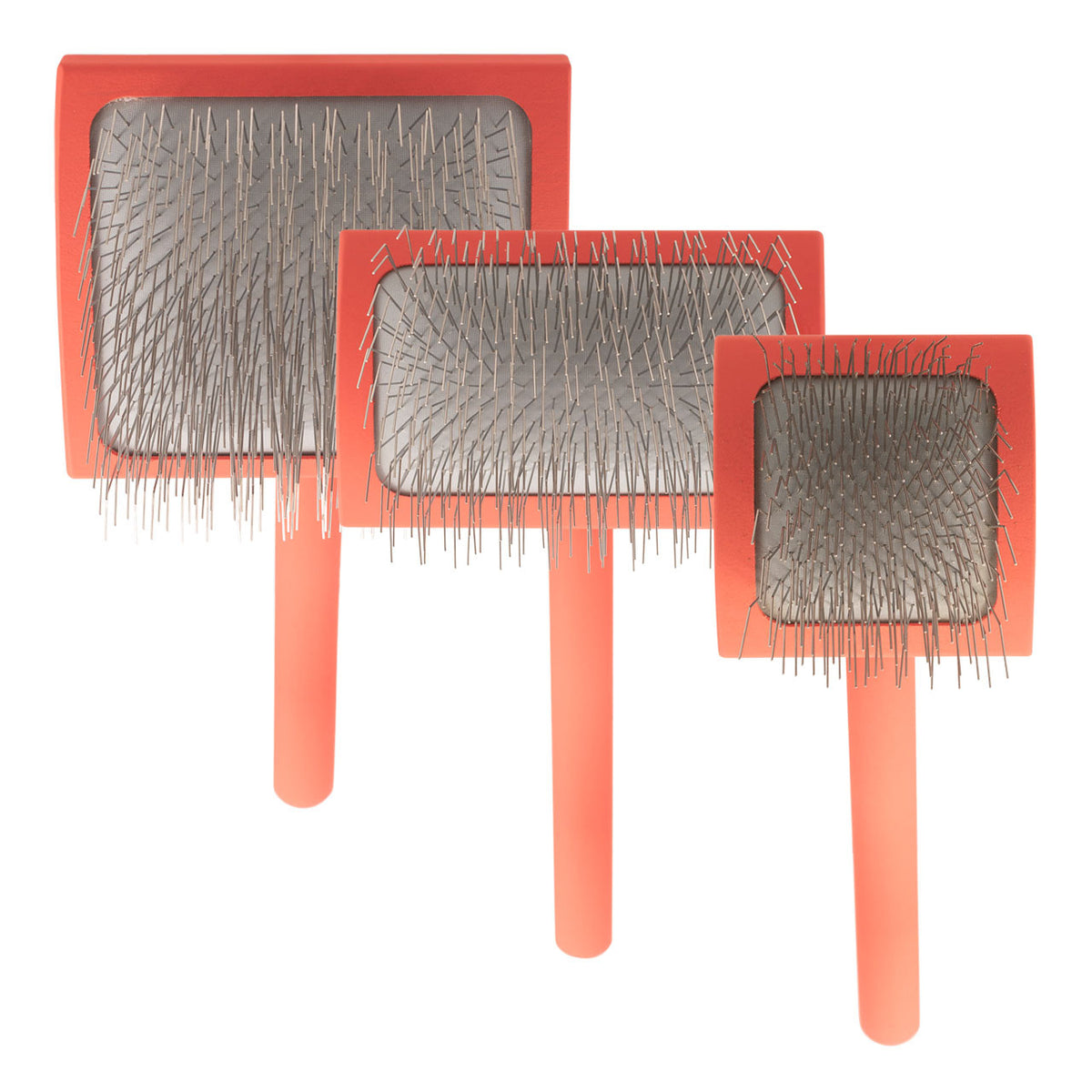
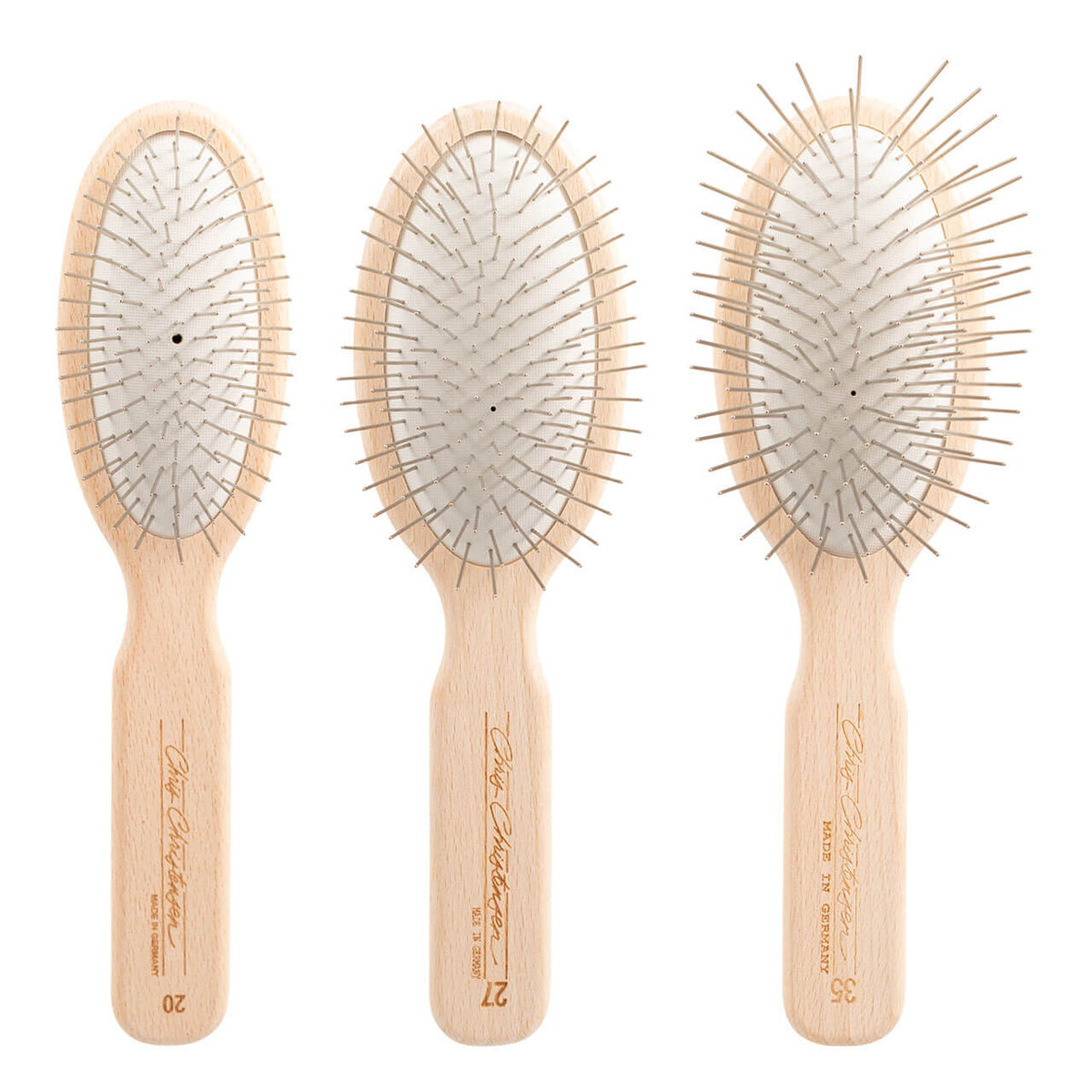
Groomers use brush and comb to mean particular steps, and the same two words can mean different things in different shops. Before you buy anything, ask yours the direct version: which step is this, what should the coat look or feel like when it’s done, and which part of the dog are we talking about? That answer decides the tool. No product page can supply it.
Take two brushes from one maker as a worked example. The Chris Christensen Big G Slicker Brushes are described by their maker as having long, dense pins that are perfect for fluffing curly, cottony coats and for fluffing and shaping heads, toplines and legs. The Chris Christensen Original Series Oval Pin Brushes are described as great for effective and efficient detangling, with tips ground and polished so they glide through the coat. Same maker, same catalogue, two different stated jobs.
Neither tool substitutes for the other’s job. Ask your groomer which step they mean before assuming a brush alone covers it.
Read the tool before assigning a job
The numbers on a listing are more specific than the sentence above them. Pin length, head size and body length are stated; what a brush will do to a particular coat is not.
The Big G Slicker Brush comes in three sizes: Baby G, Medium, and Large. Its maker describes it as the longest pin slicker brush in its range, positioned for long, dense, curly, or cottony coats, and useful for fluffing and shaping toplines, legs, and heads. That’s a shaping and lofting tool first.
The Original Series Oval Pin Brush ships in 20mm, 27mm and 35mm pin sizes on an 8.5 inch Beechwood body, with pins ground and polished for the pet’s comfort. Its listing maps each pin size to a coat depth, 20mm for short coats through 35mm for long thick full coats, and describes the brush as suited to detangling across coat types rather than shaping.
If your groomer described what they want the tool to do rather than naming one, write the description down word for word and read it back to them with a pin size attached. Does 27mm cover what you meant, or do you want longer? That’s a question a groomer can answer in a sentence, and a product page can’t answer at all.
A tool built for lofting a topline isn’t necessarily the one built for daily detangling, and the reverse holds too.

Where the comb check fits
Here’s where this article stops and your groomer starts. The two tools above have published descriptions written by the company that makes them. A comb, in your groomer’s instruction, does not.
So don’t guess at what the comb step is checking for, or where on the dog it’s meant to happen, or how a coat should feel when it’s done. Those are questions about your dog’s care instructions, which these two brush listings don’t answer.
Ask instead: when you say comb it through, which section, how often, and what am I looking for? Put those questions to the groomer who has handled your dog, and ask for the instructions in writing. A brush listing can only tell you what the brush was built for.
If your groomer’s instruction was “brush daily, comb before drop-off,” treat those as two separate steps rather than one step repeated with a different tool. Which is which, and what each one is for, is a question for them.
Ask about the coat in front of you
The most useful question to bring back to your groomer is which stage of the coat they’re describing, not which tool brand they prefer. A brush the maker positions for fluffing and shaping and a brush the maker positions for detangling are being sold for different jobs, and that’s as far as a catalogue can take you.
Ask specifically: is this step meant to lift and shape volume, or to confirm the coat is tangle-free underneath? The Big G’s long pins and sizing options (Baby G, Medium, Large) suit the first question. The Original Series Oval Pin Brush’s pin sizing (20mm, 27mm, 35mm) and glide-focused tips suit the second, according to its own product description.
Bring your groomer’s exact wording back to the tool aisle. “Brush out the undercoat” and “comb through before the bath” describe different actions, and matching a stated pin size to that wording gets you further than matching a brand name alone.
When in doubt about a specific coat condition or mat, ask the groomer directly rather than guessing from a product page.