
Coat routines · Demonstration question card
The comb check after brushing: questions for your groomer
If your groomer mentions a comb check after brushing, ask what they mean by it on your dog’s coat. Have them describe what they are checking, where they check, and what would make them pause rather than continue.
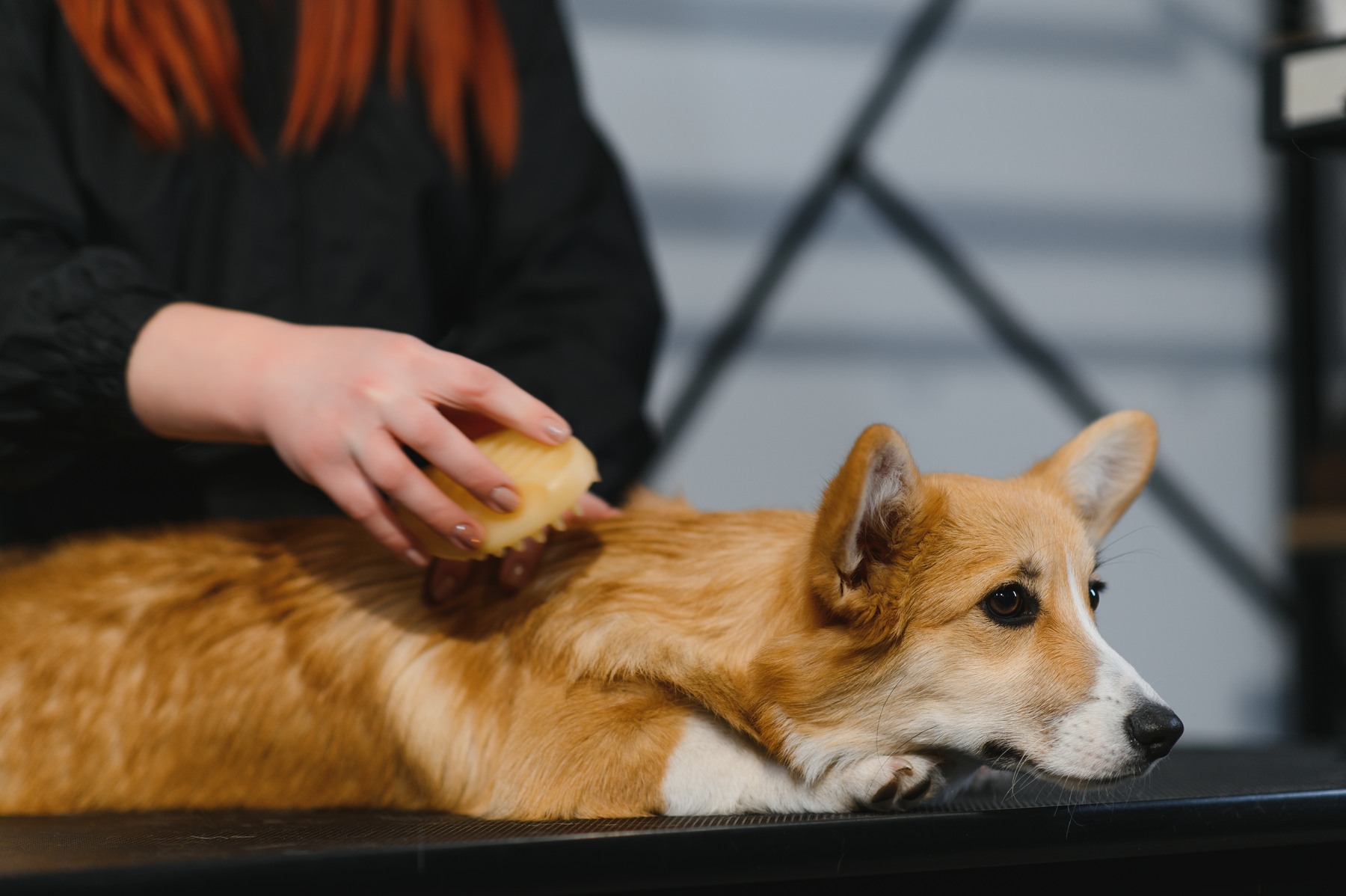
Find out what the check is meant to show
Ask what they consider a finished brushing stage and what a snag would tell them. If they suggest a check for you to do at home, ask for a demonstration on your dog and clear instructions about when to stop.
It helps to ask these questions directly:
- Which comb size or tooth spacing are you using for this check, and why that one?
- Are you checking the full body, or focus areas like behind the ears, armpits, and the tail base?
- What counts as a “pass” versus a spot that needs more brushing?
Keep the grooming question separate from a health question. Ask the groomer what they observed without treating a smooth comb pass as proof about skin or coat health. Bring a health concern to your veterinarian.

Record the stop point
Record both where the groomer finished and any point where they stopped because continuing was not appropriate. Those are different notes: a completed area and an area left alone should not look the same in the record.
Consider asking your groomer to note:
- The comb size used at the point they called the coat finished
- Any zones that took longer or needed repeated passes (ears, legs, tail, belly)
- Whether any area was left alone, why, and what follow-up the groomer recommended
A simple way to keep this consistent is a short written line after each visit, something like: comb size, problem zones, anything skipped and why. That’s a suggested format, not a required one, and you can adapt it to whatever your groomer is comfortable logging.
Ask whether the groomer keeps a note you can use for your own record. If so, ask which details they can share rather than assuming you can access their internal files.
Keep a useful note
A useful note is one you can hand to a different groomer, or reread yourself, months later and still understand. Vague notes (“coat was fine”) don’t carry information forward; specific ones do.
A note built for reuse might include:
- Date of the visit
- Coat condition observed at the comb check (comb passed cleanly, or specific snag points)
- Comb size used
- Any areas the groomer flagged for next time
Keep the format consistent across visits so you can compare one appointment to the next. A shared notes app, a small notebook kept in the dog’s carrier, or a recurring note in your phone all work as organizational choices; none is inherently better, just easier or harder for you to maintain.
At the next visit, show the note and ask whether the same check is appropriate now. If anything was left unresolved last time, bring that question forward explicitly.